The Social Fabric: How Society Holds Us, Shapes Us, and Changes With Us

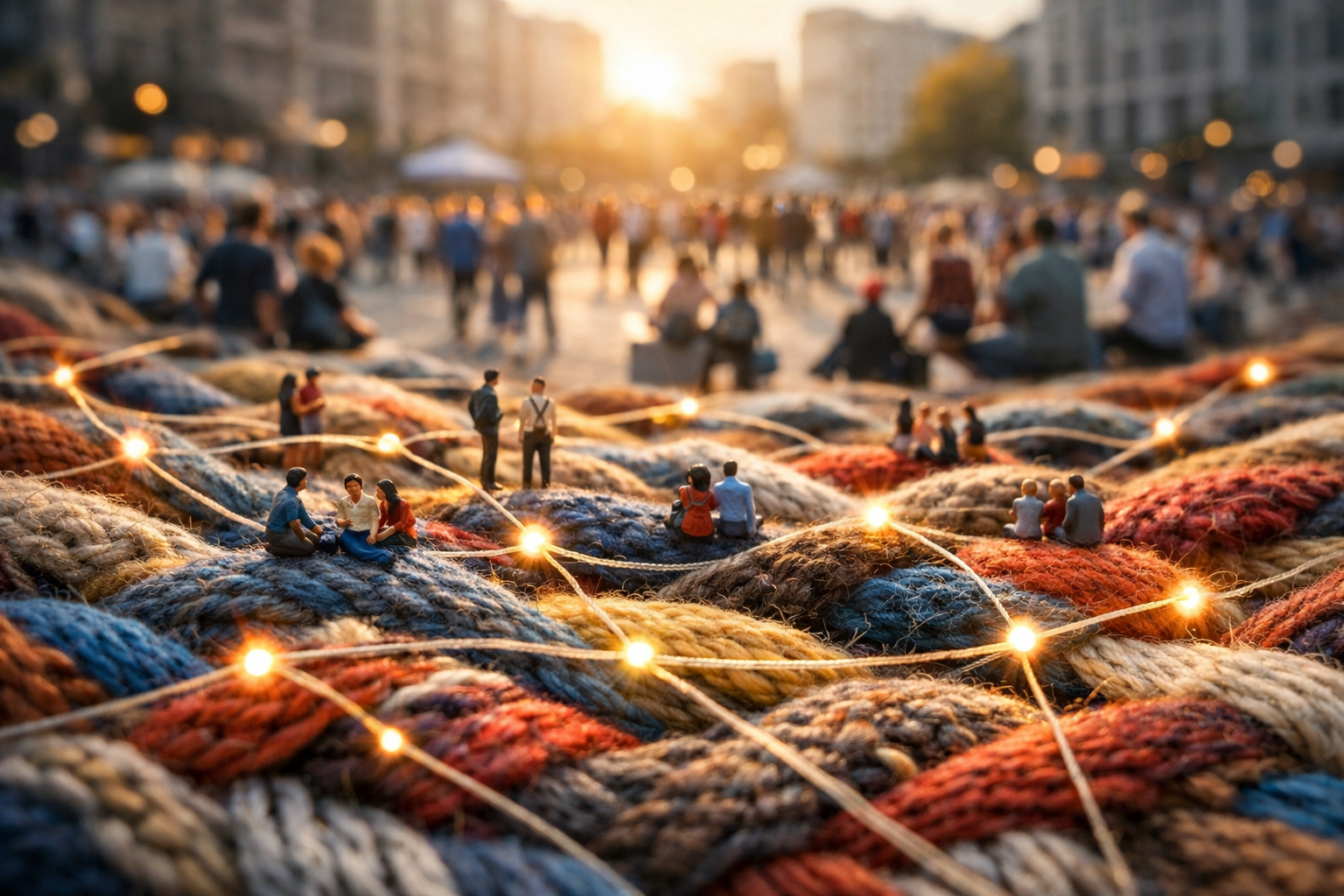
What Society Is—and Why It Matters
Society is the organized pattern of relationships through which people live together. It includes shared rules and expectations, systems of cooperation, and the everyday habits that make collective life possible. Society is not only “out there” in governments or laws; it also shows up in small gestures—how we greet one another, who we trust, how we divide labor, and what we consider fair.
Because it coordinates millions of individual choices, society determines both opportunity and constraint. It can expand what people can do by providing education, safety, and shared infrastructure. At the same time, it can restrict people through discrimination, unequal access to resources, and rigid norms. Understanding society is therefore essential for making sense of identity, inequality, politics, culture, and social change.
The Building Blocks of Society
Shared Norms and Values
Norms are informal rules—often unspoken—that guide behavior. Values are broader beliefs about what is important, such as freedom, community, tradition, or equality. Together, they provide a kind of social “operating system.” When norms are widely shared, daily life becomes predictable: people can cooperate, form agreements, and resolve conflict with fewer misunderstandings.
Norms and values are learned through socialization: the lifelong process of absorbing social expectations through family life, schooling, peer groups, media, and work. Because different communities socialize people differently, a single nation can contain multiple “moral maps” that sometimes align and sometimes collide.
Social Institutions
Institutions are stable, organized systems that meet basic social needs. Common examples include:
- Family: caregiving, emotional support, and early socialization.
- Education: knowledge transmission, skill development, and credentialing.
- Economy: production, distribution of resources, and work roles.
- Government: collective decision-making, lawmaking, and public services.
- Religion (where present): meaning-making, moral guidance, and community.
- Media: information flow, cultural narratives, and agenda-setting.
Institutions do not simply “serve” society; they also shape it. For example, education systems can open doors through learning, yet they can also reproduce inequality through unequal funding or biased tracking. Institutions are therefore both tools and battlegrounds.
Roles, Status, and Social Networks
People inhabit roles—sets of expectations tied to a position—such as parent, student, manager, or neighbor. Status refers to the social value assigned to those positions, which can be influenced by income, occupation, race, gender, age, or prestige. Meanwhile, social networks are the real pathways through which help, information, and influence travel. Who you know can affect job opportunities, health outcomes, safety, and political participation, sometimes as much as formal rules do.
How Society Maintains Order
Social order is not maintained only by police or courts. It is largely sustained through everyday compliance—people following norms because they believe in them, want approval, or wish to avoid conflict. This is called social control, and it operates in both informal and formal ways.
- Informal control: praise, gossip, reminders, ridicule, and community expectations.
- Formal control: laws, regulations, institutional discipline, and legal penalties.
Legitimacy is crucial. When people see rules and leaders as legitimate, compliance is easier and less coercion is needed. When legitimacy erodes—through corruption, exclusion, or injustice—societies often experience unrest, polarization, or alternative systems of authority.
Power and Inequality: The Uneven Distribution of Life Chances
Society distributes resources—money, education, housing, safety, time, and respect—unevenly. Inequality is not only a matter of individual effort; it is shaped by structural factors such as labor markets, neighborhood conditions, historical dispossession, and discrimination.
Power is the ability to influence outcomes, define “common sense,” and set rules that others must follow. It can be visible (laws, budgets, policing) or subtle (cultural norms, workplace expectations, and narratives about who “deserves” what). When power concentrates, social mobility can stall and democratic participation can weaken. When power is contested, new movements and reforms can emerge.
Inequality also intersects across categories. For example, economic disadvantage can combine with racial or gender discrimination, producing layered barriers. Recognizing these intersections helps explain why a single policy can affect groups differently even if it appears neutral on paper.
Culture: The Meaning-Making Engine
Culture includes language, art, rituals, beliefs, and the symbols through which people interpret reality. It is how societies tell stories about who belongs, what success looks like, and what counts as moral behavior. Culture can bind people together through shared identity, but it can also divide through stereotypes and “us versus them” narratives.
Cultural change often happens quietly—new slang, new family patterns, shifting attitudes about work-life balance—and sometimes explosively through generational conflict or political upheaval. Importantly, culture is not merely decoration; it shapes real outcomes, from health behaviors to voting patterns.
Social Change: Why Societies Transform
Societies are dynamic. They change through technology, migration, economic shifts, environmental pressures, and political struggles. Social movements play a central role by organizing collective action, reframing public debates, and pressuring institutions to adapt.
Technological change can reshape social life at speed. Social media, for instance, can amplify marginalized voices and build new communities, yet it can also spread misinformation, intensify surveillance, and encourage polarization. Similarly, economic globalization can expand markets and cultural exchange while also disrupting local industries and widening inequality.
Change is rarely linear. Reforms can provoke backlash, and new freedoms can coexist with new forms of control. A society’s resilience often depends on its ability to update institutions and norms without breaking social trust.
Everyday Society: What You Can Observe in Daily Life
You do not need to be a scholar to “see” society. It appears in ordinary scenes: who speaks in meetings, whose complaints are taken seriously, how neighborhoods are funded, how care work is valued, and how strangers cooperate in shared spaces. Paying attention to these patterns reveals the hidden architecture of collective life.
- Notice how rules differ across settings (home, workplace, public transit) and what happens when someone breaks them.
- Observe how institutions affect people differently based on income, location, or identity.
- Track how cultural narratives influence what people see as “normal,” “risky,” or “respectable.”
Conclusion: Society as a Shared Project
Society is both structure and process: it is the set of systems we inherit and the ongoing choices we make together. It shapes our identities and possibilities, but it is also shaped by our participation—through voting, working, caring, creating, and organizing. Seeing society clearly helps turn confusion into understanding and turns private struggles into shared questions. In that sense, society is not simply where we live; it is what we continuously build.

