Beyond the Board: How Games Shape Skills, Stories, and Society

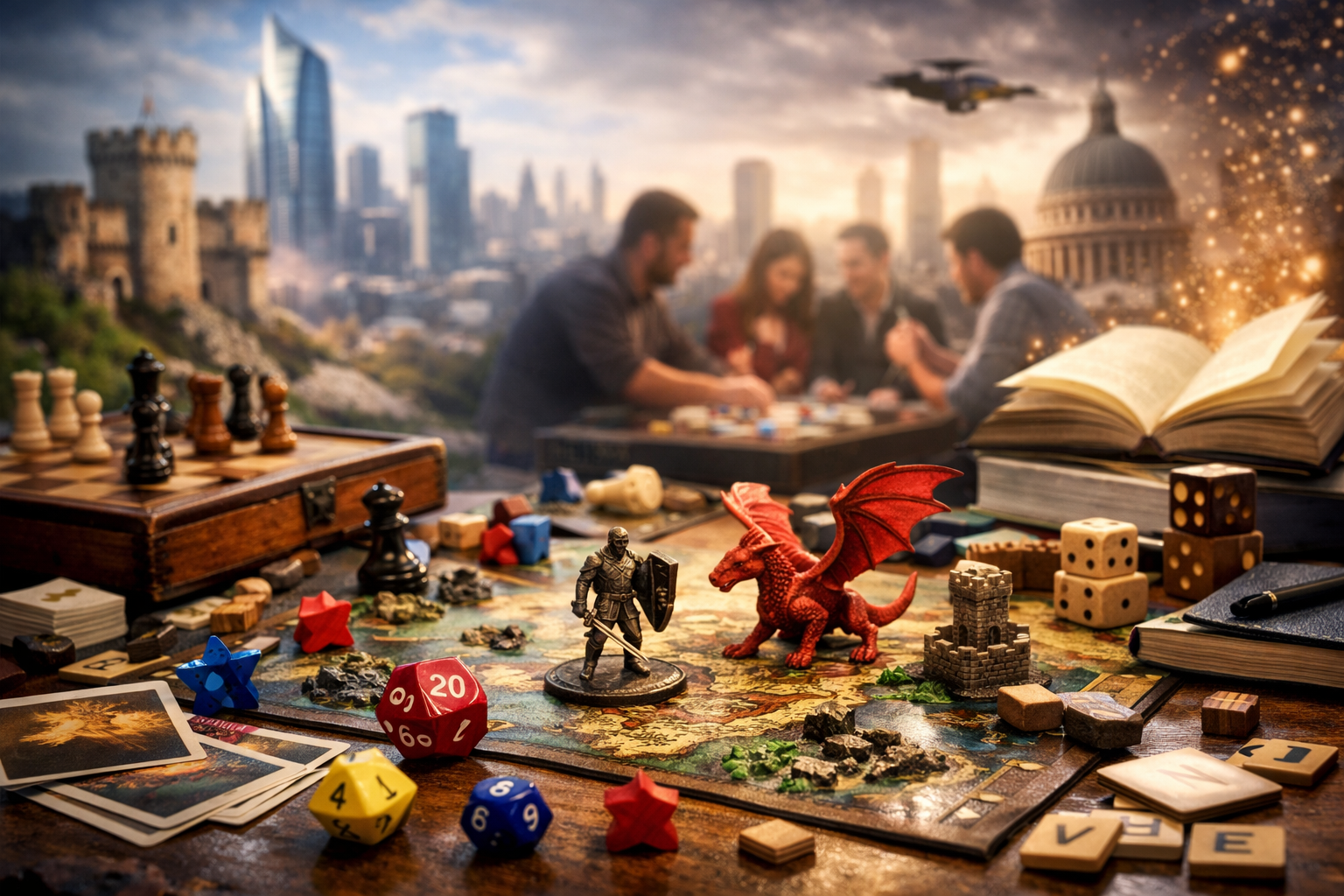
What Makes a Game a Game?
At their core, games are structured experiences built from rules, goals, and feedback. A player makes choices within a system—rolling dice, placing tiles, timing a jump, selecting a dialogue option—and the game responds. That response creates a loop of learning and adaptation, which is why games can be both absorbing and meaningful.
Most games share a few foundational ingredients:
- Rules: The constraints that define what actions are allowed.
- Goals: Win conditions, score targets, narrative outcomes, or self-set aims.
- Challenge: Obstacles that demand strategy, skill, or creativity.
- Feedback: Immediate signals like points, sound cues, animations, or story consequences.
- Voluntary participation: Players opt in, which changes how effort and failure feel.
This combination turns ordinary actions into purposeful play. Even simple games like tag or tic-tac-toe become compelling because they compress decision-making into a clear, repeatable structure.
A Brief Tour of Game Types
Games appear in many forms, each emphasizing different kinds of thinking and interaction. Understanding categories can help players find what they enjoy—and help designers understand what experiences they’re crafting.
Traditional and Analog Games
Board games, card games, and tabletop roleplaying games rely on face-to-face interaction and shared physical components. Their strengths often include social negotiation, tactile satisfaction, and flexible pacing. Party games encourage quick communication and humor, while strategy titles reward planning and long-term tradeoffs.
Digital Games
Video games add real-time simulation, audiovisual storytelling, and large-scale online play. Genres range widely: action, puzzle, roleplaying, simulation, sports, and more. Digital systems can also track complex states—economies, skill trees, physics—allowing worlds to feel responsive and alive.
Hybrid and Emerging Formats
Mobile games, augmented reality, and cross-platform play blur lines between digital and physical spaces. Escape rooms and location-based games turn neighborhoods into playfields, while livestreamed play and spectator modes make gaming a participatory audience experience.
Why People Play: Motivation and Meaning
Games are often described as “fun,” but that word covers many motivations. Players may seek mastery, relaxation, social belonging, or narrative immersion. A competitive player might enjoy ranked ladders and tournaments; another might prefer peaceful building and exploration.
Common player motivations include:
- Mastery: Improving skill, learning systems, and achieving difficult goals.
- Autonomy: Making meaningful choices and shaping outcomes.
- Connection: Cooperating with friends, meeting communities, and sharing experiences.
- Escapism and restoration: Recovering from stress through absorbing, low-stakes play.
- Curiosity: Discovering secrets, experimenting, and seeing “what happens if…”
Importantly, “fun” can include frustration, tension, and suspense—emotions that become enjoyable when players trust the game is fair and progress is possible.
The Skills Games Can Build
Because games are practice systems, they can strengthen skills—especially when players reflect, iterate, and receive clear feedback. Not every game trains every skill, but many encourage transferable habits of mind.
Cognitive and Problem-Solving Skills
Puzzle and strategy games develop pattern recognition, planning, and resource management. Players learn to test hypotheses, track variables, and make probabilistic judgments. Even fast-paced games can reinforce attention control and rapid decision-making under pressure.
Social and Communication Skills
Cooperative games encourage role clarity, coordination, and shared responsibility. Negotiation-based games train persuasion and empathy, as players anticipate others’ intentions. Tabletop roleplaying often strengthens improvisation and collaborative storytelling, rewarding listening as much as speaking.
Emotional Resilience
Games normalize failure as part of progress: losing a match, missing a jump, or restarting a level becomes feedback rather than a final judgment. Over time, players can develop persistence, patience, and a healthier relationship with mistakes—especially when games present challenges that feel achievable.
Games as Culture: Stories, Art, and Community
Modern games are cultural artifacts. They combine visual design, music, writing, and interactivity in ways that can rival film and literature while adding a unique ingredient: player agency. A story in a game is not only told; it is experienced through choices, exploration, and consequence.
Communities also give games lasting impact. Fans create guides, mods, fan art, competitive scenes, and charity events. Some games become “third places,” offering social spaces that feel familiar and supportive. This is especially significant for people who may have limited access to in-person communities.
Healthy Play: Benefits, Risks, and Balance
Gaming can support relaxation, connection, and learning, but like any powerful medium it benefits from intentional use. Time can slip away easily, especially in games designed around long progression loops or social obligations.
Consider these habits for healthier play:
- Set boundaries: Use timers or clear stopping points (end of a match, end of a quest).
- Choose games that fit your mood: Competitive intensity isn’t always restorative.
- Watch monetization design: Be mindful with loot boxes, microtransactions, and impulse spending.
- Prioritize ergonomics: Breaks, posture, and eye comfort matter during long sessions.
- Keep play social and reflective: Talking about experiences can deepen enjoyment and reduce tilt.
For parents and guardians, the most effective approach is often curiosity rather than suspicion: learn what a game involves, play together when possible, and discuss online interactions and spending.
The Future of Games
Games continue to expand in reach and purpose. Advances in accessibility features are making more titles playable for people with diverse needs. Crossplay and cloud gaming aim to reduce hardware barriers. Meanwhile, serious games and simulations support training in medicine, aviation, and emergency response, showing that game structures can be useful far beyond entertainment.
As the medium grows, the most enduring games will likely be those that respect players: offering fair challenges, meaningful choices, and communities that welcome more people into play.

