The Living Language of Arts: How Creativity Shapes Culture, Memory, and Change

Understanding What “Arts” Really Means
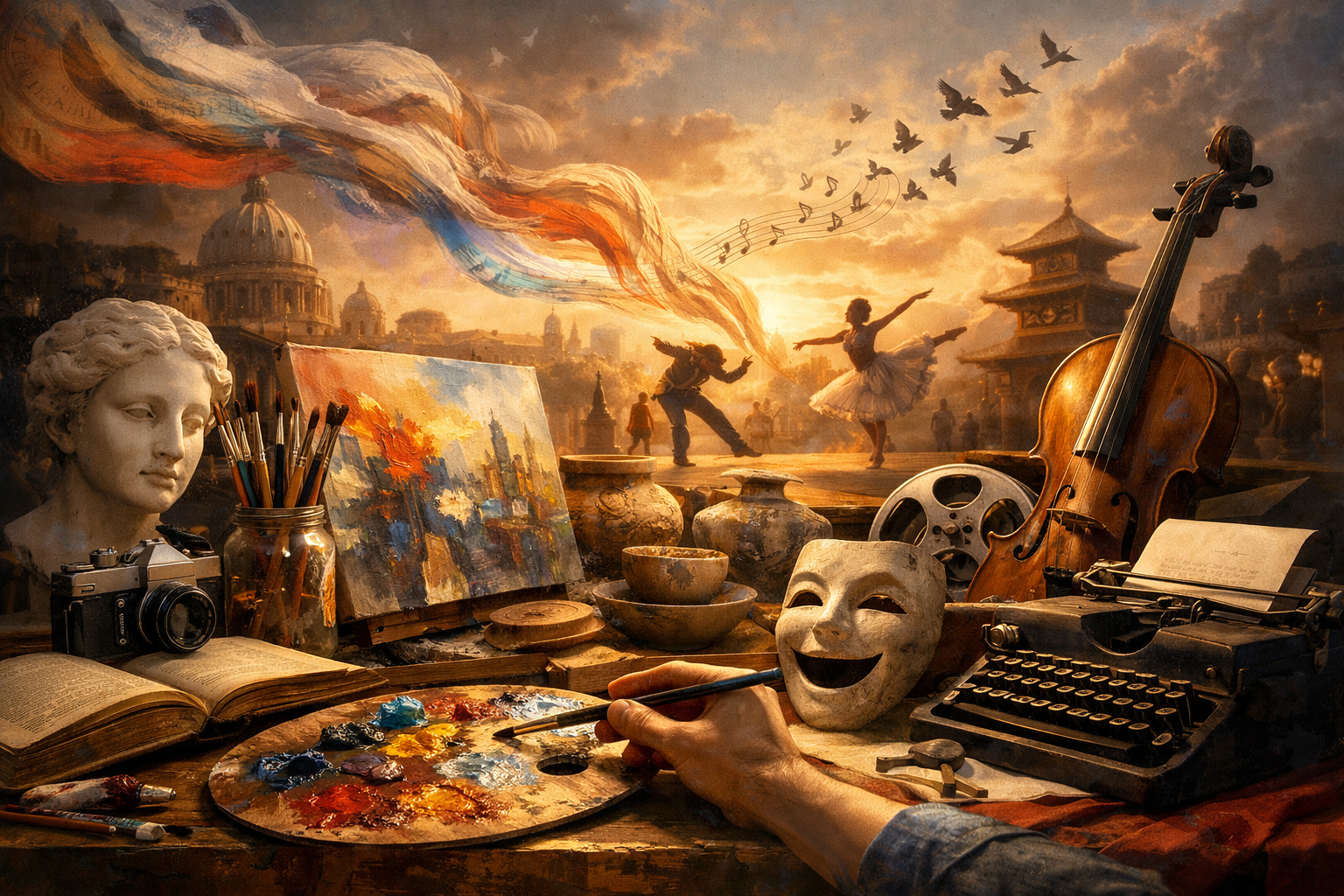
The word arts is often used as a broad umbrella for creative practices—painting, music, dance, theater, literature, film, design, architecture, and more. But arts are not merely categories of output. They are ways of thinking and communicating: a set of tools humans use to make meaning, share emotion, ask difficult questions, and give form to ideas that are hard to express with facts alone.
Across history and geography, artistic traditions have served as social records, spiritual practices, entertainment, protest, and education. The arts are both personal (one person shaping a private experience into a tangible form) and communal (a society recognizing itself in stories, images, and rituals).
Core Functions of the Arts in Society
1) Expression and Emotional Literacy
Arts expand emotional vocabulary. A song can convey grief without explanation; a sculpture can evoke awe before any words appear. In this sense, arts develop emotional literacy—helping individuals identify, process, and communicate feelings. This is not limited to “high art”; a mural in a neighborhood, a poem shared online, or a dance in a living room can all serve the same fundamental purpose.
2) Storytelling and Cultural Memory
Arts store memory. Oral epics, folk songs, theater traditions, and contemporary cinema all preserve values and experiences—sometimes in direct documentary ways, and sometimes through allegory. When communities face disruption through migration, conflict, or modernization, arts often become the thread that keeps language, symbols, and shared narratives intact.
3) Critique, Protest, and Social Imagination
Artists frequently act as public thinkers. Through satire, symbolism, and re-framing everyday scenes, art can question power and make visible what is ignored. Protest posters, street art, spoken word, political theater, and socially engaged photography have repeatedly shown how creative expression can mobilize attention and empathy. Just as importantly, arts help people imagine alternatives—new models of community, justice, and belonging.
4) Craft, Skill, and the Pleasure of Mastery
Arts are also disciplines of practice. Years of training in composition, drawing, choreography, editing, or ceramics develop attention, patience, and technical intelligence. Even when art looks effortless, it often rests on deep knowledge: how light behaves, how rhythm builds tension, how materials respond to pressure, how audiences read symbols.
Major Branches of the Arts—and How They Interconnect
While the arts are sometimes divided into separate “fields,” in practice they overlap constantly. Film blends visual design, writing, sound, and performance. Architecture merges engineering constraints with aesthetic intention. Digital art may include animation, coding, illustration, and interactive storytelling.
- Visual Arts: Painting, drawing, sculpture, photography, printmaking, and contemporary installation work.
- Performing Arts: Theater, dance, music performance, opera, puppetry, and interdisciplinary stage work.
- Literary Arts: Poetry, fiction, essays, memoir, graphic novels, and spoken word traditions.
- Media Arts: Film, animation, game design, sound art, and interactive or immersive experiences.
- Applied Arts: Fashion, industrial design, graphic design, and crafts—where aesthetics meet daily function.
These branches share a common foundation: choices about form, rhythm, texture, proportion, narrative, and audience. The medium changes, but the core artistic questions persist: What is the work trying to do? How does it do it? Who is it for, and what might it change?
How the Arts Evolve: Tradition, Innovation, and Technology
Arts evolve through conversation with the past and experimentation in the present. Traditions provide techniques, motifs, and standards that can be preserved, adapted, or challenged. Innovation often comes from cross-cultural exchange, new materials, or shifts in social values. Technology accelerates this process by expanding access to tools and platforms.
Digital creation software, affordable recording equipment, and global distribution channels allow more people to publish work than ever before. At the same time, this raises new questions: Who owns creative work? How do algorithms shape taste? What does authenticity mean when images, voices, or styles can be replicated quickly?
Rather than replacing older forms, new tools often reconfigure them. A classical instrument can appear in electronic music. A traditional textile pattern can inspire contemporary graphic design. A museum exhibition can be paired with augmented reality that adds layers of context. The arts remain a moving target—constantly renegotiated by creators and audiences.
Why Arts Education Matters Beyond the Studio
Arts education is not only about producing artists. It develops transferable capacities that are valuable across fields: observation, interpretation, experimentation, and resilience through iterative revision. Learning to draw trains the eye to notice structure. Learning music trains timing, listening, and coordination. Learning theater strengthens collaboration and communication.
Equally important is the civic dimension. Arts education can help students understand diverse perspectives, interpret media critically, and build empathy. When people learn how meaning is constructed—through framing, editing, symbolism, and narrative—they become more discerning consumers of information and culture.
Arts in Everyday Life: Participation, Not Just Consumption
It is easy to think of arts as something “out there,” made by professionals and consumed by audiences. But arts are also participatory practices that live in routines: cooking as an aesthetic craft, personal style, storytelling within families, playlists curated for moods, community festivals, and handmade gifts. Participation doesn’t require permission—only attention and willingness.
Supporting the arts can be simple and local: attend performances, visit exhibitions, buy from independent creators, share credit, and advocate for creative spaces in schools and neighborhoods. The health of an arts ecosystem depends on audiences who are curious and institutions that are accessible.
Conclusion: Arts as a Human Necessity
The arts are not decorative extras. They are a human necessity—one of the most powerful ways people build identity, communicate across difference, and transform experience into shared meaning. Whether expressed through a symphony, a street mural, a short film, or a handmade object, art reminds us that life is not only to be measured, but also to be felt, interpreted, and reimagined.

