Arts as a Living Language of Human Expression

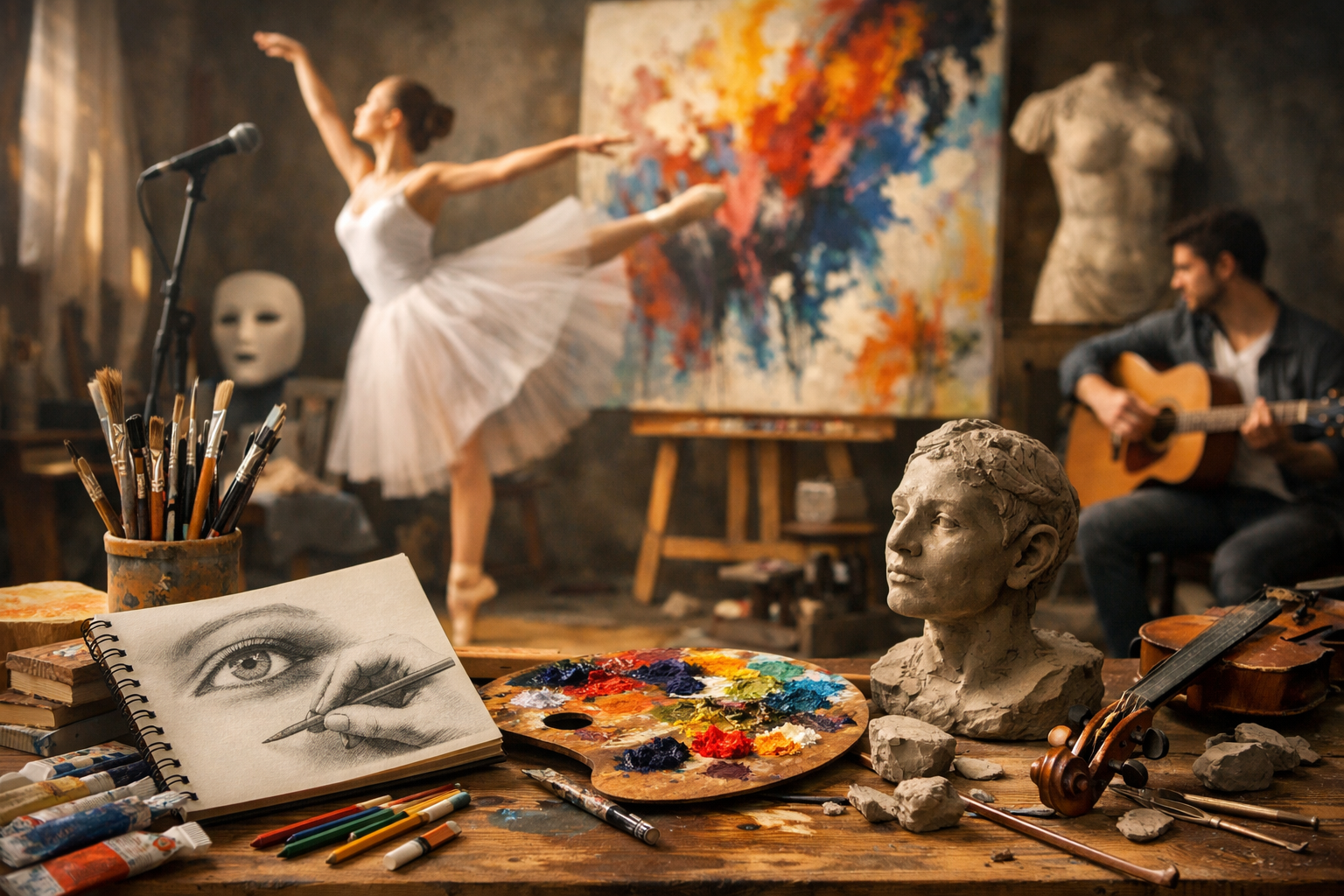
The Enduring Power of the Arts
The arts have always been central to human civilization. Long before written history, people used images, rhythm, movement, and storytelling to record experiences and communicate ideas. Cave paintings, ritual dances, songs, and carved objects were not merely decorative creations; they were tools for memory, identity, spirituality, and survival. Today, the arts continue to serve these roles while also evolving alongside technology, politics, and social change.
At their core, the arts allow people to translate thoughts and feelings into forms others can experience. A painting can express silence, tension, or joy without a single spoken word. A piece of music can capture grief or celebration with extraordinary precision. Theater can reveal the complexity of human relationships, while film can combine image, sound, and narrative into an immersive emotional experience. The arts make inner life visible, audible, and shareable.
Major Forms of Artistic Expression
The term “arts” includes a wide range of disciplines, each with its own methods, traditions, and impact. While categories often overlap, several major forms have shaped cultural life across generations.
Visual Arts
Visual arts include painting, drawing, sculpture, photography, printmaking, and contemporary mixed media. These forms rely on line, shape, color, texture, and composition to create meaning. Visual artists can document reality, interpret emotion, challenge social norms, or invent entirely new worlds. Public murals, gallery exhibitions, and digital illustrations all belong to this broad and dynamic field.
Performing Arts
Performing arts bring creativity to life through movement, sound, and presence. This category includes theater, dance, opera, and live performance. Unlike a static artwork, a performance unfolds in time and often changes with every audience. The energy between performers and viewers creates a unique shared experience that cannot be fully repeated.
Music and Sound Arts
Music is one of the most universal art forms. It crosses language barriers and speaks directly to emotion, memory, and physical response. From classical composition and folk traditions to jazz, hip-hop, and electronic sound design, music reflects both individual creativity and collective identity. Sound art has also expanded the boundaries of what counts as artistic expression, turning everyday noise, silence, and recorded environments into meaningful works.
Literary Arts
Poetry, fiction, drama, and creative nonfiction use language as an artistic medium. Literary arts can preserve history, question power, explore identity, and deepen empathy. Through stories and verse, writers create spaces where readers can encounter unfamiliar perspectives and reflect on their own lives. Literature often works in conversation with other arts, inspiring films, plays, and visual interpretations.
Digital and Interdisciplinary Arts
Modern technology has transformed artistic practice. Digital illustration, animation, video art, virtual reality, interactive installations, and game design have expanded the definition of art. Many contemporary artists combine media, blending sound, image, text, performance, and code. This interdisciplinary approach reflects a world in which boundaries between forms are increasingly fluid.
Why the Arts Matter in Society
The value of the arts goes far beyond entertainment. Arts enrich communities, strengthen education, and foster dialogue across differences. They help societies remember where they have been and imagine where they might go.
Cultural preservation: Artistic traditions carry language, beliefs, rituals, and histories from one generation to the next.
Emotional expression: The arts provide healthy ways to process joy, sorrow, anger, hope, and uncertainty.
Social reflection: Artists often respond to injustice, inequality, conflict, and change, helping audiences confront difficult realities.
Education and creativity: Arts education develops observation, problem-solving, imagination, discipline, and collaboration.
Economic impact: Creative industries support jobs in design, publishing, entertainment, advertising, museums, and cultural tourism.
In schools, the arts often improve confidence and engagement by giving students multiple ways to learn and communicate. In public life, they shape the identity of cities and neighborhoods through architecture, festivals, community theater, and public art. In healthcare settings, arts programs have been used to support emotional well-being and recovery. Their influence is both visible and subtle, practical and profound.
The Arts as a Mirror and a Catalyst
One of the most powerful functions of art is its ability to reflect society while also challenging it. Artists do not simply copy the world around them; they interpret it. Through symbolism, satire, abstraction, and experimentation, they ask audiences to look again at what they may take for granted. A novel can question social values. A protest song can unite a movement. A film can humanize lives that are often ignored.
Because of this, the arts have long been connected to freedom of expression. In many times and places, artists have spoken when others could not. Their work can preserve dissent, reveal hidden truths, and inspire public conversation. Even when art is personal rather than political, it expands the range of human understanding by honoring complexity and difference.
Challenges and the Future of the Arts
Despite their importance, the arts often face serious challenges. Funding can be unstable, especially for public institutions, independent artists, and arts education programs. Access also remains unequal. Many communities have limited exposure to museums, performances, or creative resources. Digital platforms have increased visibility for artists, but they have also created issues around copyright, oversaturation, and fair compensation.
At the same time, the future of the arts is full of possibility. Online galleries, streaming concerts, digital publishing, and global collaboration have made creative work more accessible than ever. Emerging technologies such as artificial intelligence and immersive media are raising new questions about authorship, originality, and the relationship between tools and imagination. These debates are not signs of decline, but evidence that the arts continue to adapt.
Conclusion
The arts are not a luxury added to life after practical needs are met. They are part of how people understand themselves, connect with others, and shape culture. They preserve memory, encourage empathy, challenge assumptions, and invite innovation. Whether encountered in a concert hall, on a street wall, in a book, on a stage, or through a screen, the arts remain a living language of human expression. Their forms may change, but their importance endures.

