Computers Explained: The Machines Powering Modern Life

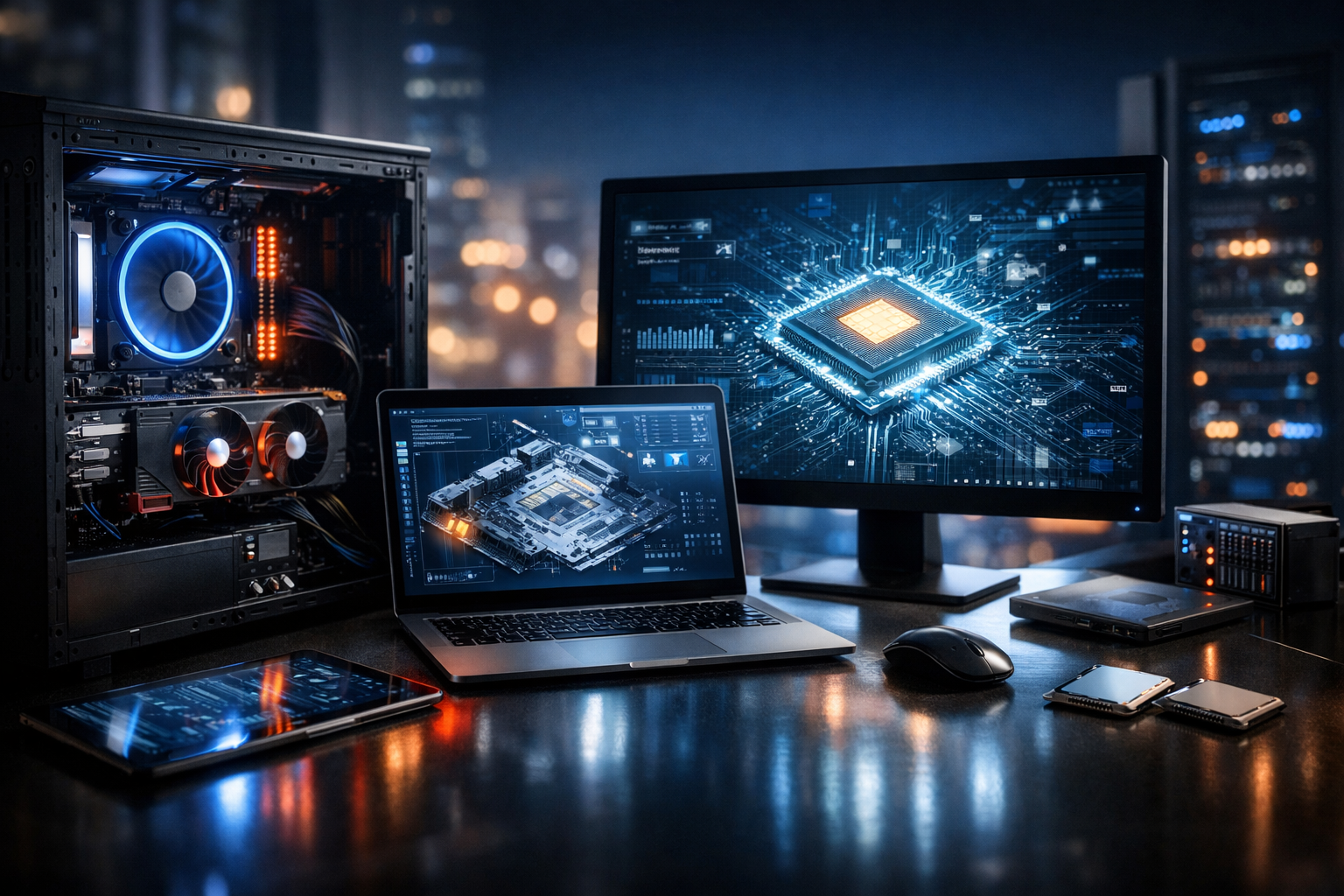
Introduction to Computers
Computers are among the most influential inventions in human history. From massive research systems to the smartphone-like devices people carry every day, computers help store information, solve problems, automate tasks, and enable communication at remarkable speed. They are used in homes, schools, hospitals, factories, government offices, and nearly every modern industry.
At their core, computers are electronic machines designed to receive input, process data according to instructions, store information, and produce output. While this definition sounds simple, the capabilities built on top of it are extraordinary. Computers can manage financial transactions, control medical equipment, render digital art, simulate weather systems, and support global communication networks.
How Computers Work
A computer functions through a combination of hardware and software. Hardware refers to the physical components that make up the machine, while software consists of the programs and instructions that tell the hardware what to do. Together, these elements create a system capable of performing everything from simple calculations to complex artificial intelligence tasks.
Main Hardware Components
Central Processing Unit (CPU): Often called the brain of the computer, the CPU executes instructions and performs calculations.
Memory (RAM): Random Access Memory temporarily stores data that the computer is actively using, allowing quick access and faster performance.
Storage: Hard drives and solid-state drives store files, applications, and operating systems for long-term use.
Motherboard: This is the main circuit board that connects all major components and allows them to communicate.
Input Devices: Keyboards, mice, scanners, microphones, and webcams allow users to send data into the computer.
Output Devices: Monitors, printers, and speakers present processed information to the user.
The Role of Software
Software is what makes computer hardware useful. An operating system such as Windows, macOS, or Linux manages the computer’s resources and provides the environment in which applications run. Programs like word processors, web browsers, design tools, and games all depend on software code to perform their tasks. Without software, even the most advanced computer hardware would remain idle.
Types of Computers
Computers come in many forms, each designed for different purposes. Over time, technology has made computers smaller, faster, and more specialized.
Desktop Computers: These are commonly used in homes and offices. They offer strong performance and are easy to upgrade.
Laptops: Portable and compact, laptops combine mobility with many of the features of desktop systems.
Tablets: Tablets emphasize portability and touch-based interaction, making them convenient for media consumption and light work.
Servers: Servers are powerful computers that provide data, services, or resources to other computers on a network.
Supercomputers: Built for highly complex calculations, supercomputers are used in scientific research, engineering, and large-scale simulations.
Embedded Computers: These are built into other devices such as cars, appliances, medical equipment, and industrial machines.
Why Computers Matter in Daily Life
Computers have transformed everyday living in ways that are both visible and invisible. People use them for education, entertainment, shopping, communication, and work. Email, video calls, online banking, streaming services, and digital navigation all rely on computer systems operating behind the scenes.
In education, computers provide access to online courses, digital libraries, and interactive learning tools. In business, they support accounting, customer service, project management, and data analysis. In healthcare, computers help manage patient records, assist in diagnostics, and enable telemedicine. Even transportation systems now depend heavily on computerized control and monitoring.
The Evolution of Computers
Early computers were huge, expensive machines used mainly by governments, universities, and large organizations. They occupied entire rooms and had limited processing power compared to even basic modern devices. Over the decades, advances in semiconductor technology, miniaturization, and software development drastically changed the landscape.
The invention of the microprocessor allowed computing power to fit into smaller machines, leading to the rise of personal computers. Later, the internet connected computers globally, revolutionizing how information is shared. Today, cloud computing, artificial intelligence, and edge devices continue to expand what computers can do.
Benefits and Challenges
Key Benefits
Speed: Computers process vast amounts of data in seconds.
Accuracy: When properly programmed, they perform tasks with high precision.
Automation: Repetitive work can be completed efficiently with minimal human intervention.
Connectivity: Computers enable instant communication and information sharing worldwide.
Productivity: They simplify document creation, analysis, design, and collaboration.
Common Challenges
Cybersecurity Risks: Computers can be targeted by malware, phishing attacks, and data breaches.
Privacy Concerns: Digital systems may collect, store, and share personal information.
Obsolescence: Hardware and software can become outdated quickly.
Digital Dependence: Heavy reliance on computers can create disruptions when systems fail.
The Future of Computers
The future of computers points toward greater intelligence, portability, and integration into everyday environments. Artificial intelligence is making systems more responsive and capable of learning from data. Quantum computing, although still developing, promises to solve certain complex problems much faster than traditional computers. Wearable devices, smart homes, and connected infrastructure suggest that computing will become even more embedded in daily life.
At the same time, the future will require careful attention to ethics, security, sustainability, and digital inclusion. As computers become more powerful, societies will need to ensure that the benefits are widely shared and the risks responsibly managed.
Conclusion
Computers are far more than machines for calculations. They are versatile systems that shape communication, innovation, education, commerce, and entertainment. By combining hardware and software, computers make it possible to process information efficiently and solve problems on a global scale. As technology continues to evolve, computers will remain at the center of modern progress, influencing how people live, work, and connect with the world.

